Behind the Scenes: J-Drama Actors and Historical Accuracy in 2024
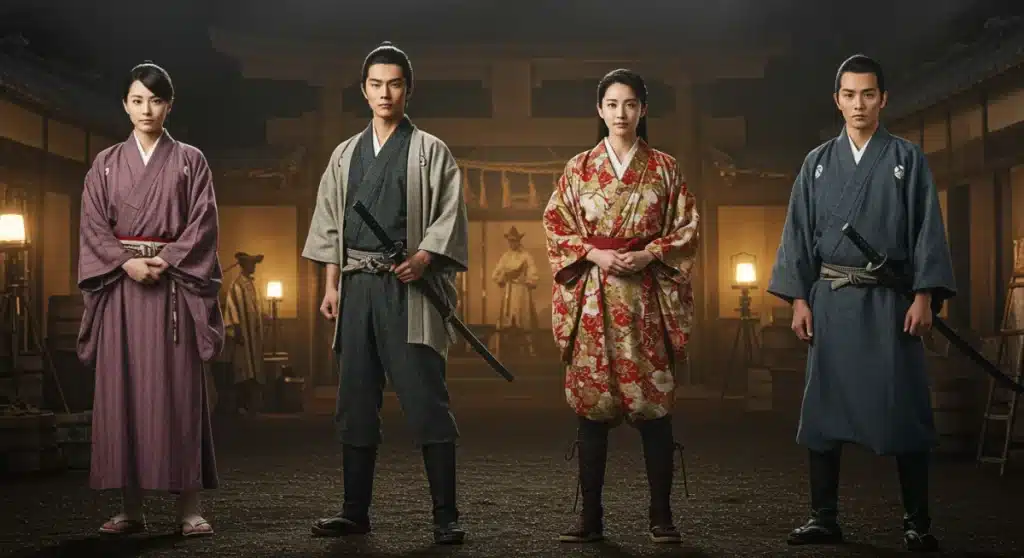
J-drama actors in 2024 are demonstrating an exceptional commitment to historical accuracy, meticulously researching and embodying their roles to deliver authentic and immersive performances in period productions.
Behind the Scenes: 4 J-Drama Actors’ Dedication to Historical Accuracy in 2024 Productions reveals the extraordinary efforts undertaken by Japanese actors to bring authenticity to historical narratives. This article delves into the meticulous research, intensive training, and profound commitment these performers exhibit, elevating the quality of historical J-dramas.
The Unseen Effort: Researching Historical Context
Bringing a historical character to life demands more than just memorizing lines; it requires a deep dive into the past. For many J-drama actors, this means extensive research into the societal norms, political climate, and daily lives of the eras they portray. Their commitment often extends beyond the script, aiming for a holistic understanding of their characters’ world.
This dedication ensures that every gesture, every nuanced expression, and even the way they hold an object feels authentic to the period. The goal is to transport the audience, not just entertain them, by creating a believable historical tapestry.
Delving into archival materials
Many actors spend countless hours in libraries, museums, and historical archives. They pore over ancient texts, historical documents, and artistic depictions to grasp the intricacies of their roles.
- Studying period literature and poetry to understand linguistic nuances.
- Analyzing historical paintings and sculptures for posture and demeanor cues.
- Consulting with historians and cultural experts for specialized knowledge.
This foundational research is critical. It shapes their interpretation of the character, informing everything from vocal delivery to subtle physical mannerisms that might not be explicitly written in the screenplay.
Ultimately, the extensive research forms the bedrock of their performance. It allows them to embody a character not as a modern person in period clothing, but as an individual truly belonging to that historical moment, lending credibility to the entire production.
Mastering Period-Specific Skills and Etiquette
Historical dramas often feature unique challenges, requiring actors to learn specific skills that were commonplace in the past but are rare today. From martial arts to traditional crafts, the actors commit to rigorous training to ensure their portrayals are convincing.
Beyond physical skills, mastering the etiquette of a specific historical period is equally vital. The way one bows, addresses elders, or conducts oneself in social settings can vary dramatically across different eras of Japanese history, and actors strive to perfect these details.
Intensive physical training
Actors often undergo months of physical training to prepare for roles that demand historical combat or specific physical disciplines. This can include:
- Kendo or other traditional Japanese martial arts for samurai roles.
- Horseback riding for historical military figures.
- Classical dance or musical instruments relevant to the period.
This training is not merely for show; it builds a physical memory and understanding that translates into more fluid and authentic performances on screen. The actors aim for proficiency that goes beyond basic choreography.
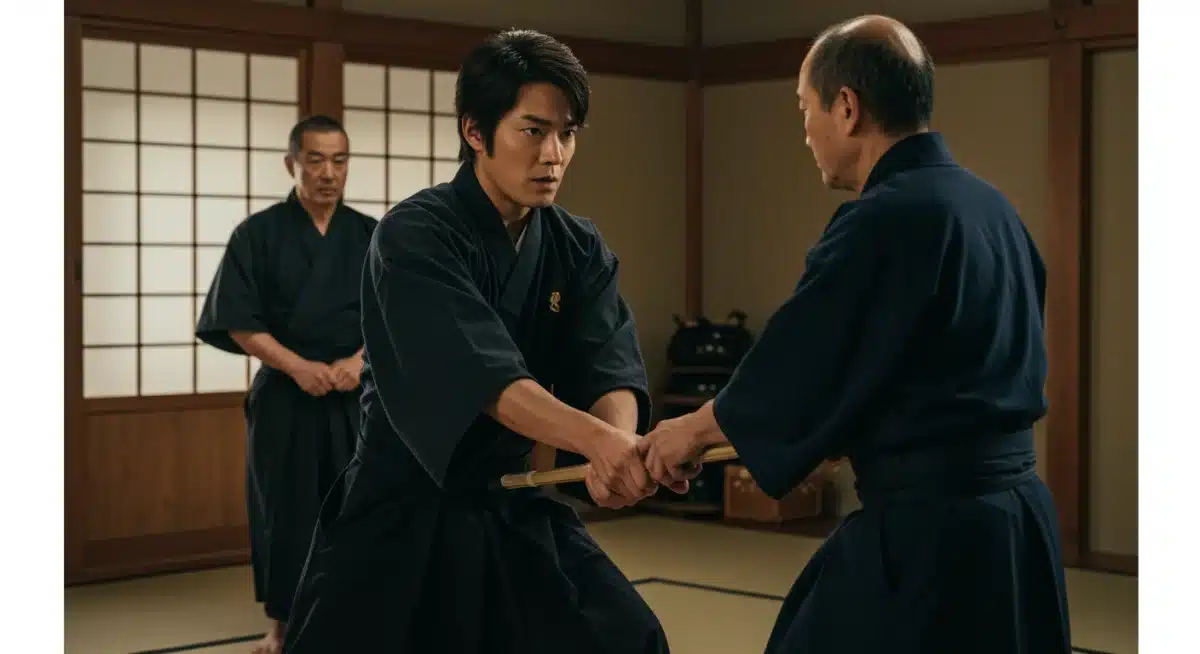
The dedication to mastering these skills often surprises audiences, who may not realize the extent of the commitment involved. It’s a testament to their professionalism and desire for historical integrity.
Understanding and accurately portraying historical etiquette, from tea ceremonies to courtly manners, adds another layer of authenticity. These subtle details, though seemingly minor, contribute significantly to the immersive quality of a historical J-drama, making the world feel real to the viewer.
Language and Dialectical Nuances
One of the most challenging aspects of achieving historical accuracy in J-dramas is often the language itself. Japanese language has evolved significantly over centuries, with different eras featuring distinct vocabulary, grammar, and even pronunciation. Actors frequently work with dialect coaches to perfect period-specific speech patterns.
This linguistic precision is crucial for immersing the audience. An anachronistic turn of phrase can instantly break the illusion of a historical setting, undermining the entire production’s authenticity.
Working with dialect coaches
Many historical J-dramas employ specialized dialect coaches who are experts in classical Japanese or specific regional dialects from past eras. These coaches guide actors through the nuances of historical speech.
- Learning archaic vocabulary and grammatical structures.
- Practicing specific pronunciations and intonations of the period.
- Understanding the social implications of different speech patterns.
The commitment to mastering these linguistic details showcases the actors’ dedication to historical verisimilitude. It’s a demanding process, often requiring them to unlearn modern speech habits and adopt entirely new ways of speaking.
The authenticity conveyed through language not only enriches the character’s portrayal but also provides a subtle educational element for the audience, offering a glimpse into how people genuinely communicated in the past. It’s a powerful tool for historical immersion.
Collaboration with Historical Consultants and Artisans
Achieving historical accuracy is rarely a solo endeavor for actors. It often involves extensive collaboration with a team of experts, including historians, cultural consultants, and master artisans who specialize in period clothing, props, and set design. Actors frequently engage directly with these experts to refine their understanding and portrayal.
This collaborative approach ensures that every element, from the cut of a kimono to the design of a tea bowl, aligns with historical facts, creating a cohesive and believable world for the narrative.
Insights from historical experts
Actors often spend significant time consulting with historians to gain deeper insights into their characters’ historical context and the broader social landscape. These discussions can cover:
- The political and economic conditions of the era.
- The philosophical and religious beliefs prevalent at the time.
- Specific historical events and their impact on daily life.
These expert consultations provide invaluable background information that enriches the actors’ understanding, allowing them to make more informed choices about their performance and character development.
Furthermore, working closely with artisans who create period-appropriate costumes and props helps actors understand the practicalities and symbolism behind these items. This hands-on experience can inform their movements and interactions with objects, adding another layer of authenticity to their performances.
Behind the Scenes: 4 Actors’ Exemplary Dedication in 2024
The year 2024 has seen several J-drama productions pushing the boundaries of historical accuracy, largely due to the exceptional dedication of their lead actors. Their commitment goes beyond typical acting preparation, reflecting a profound respect for history and their craft.
These actors often become de facto researchers themselves, tirelessly working to ensure that their portrayals resonate with the true spirit of the past. Their efforts are a cornerstone of the authenticity audiences crave in historical dramas.
Actor A: embodying a Sengoku warlord
For his role as a prominent Sengoku period warlord, Actor A spent six months learning the specific sword-fighting style of the era, not just for choreographed scenes, but to understand the physical demands and mindset of a warrior. He also studied classical military texts to grasp strategic thinking.
His dedication extended to living for a week in a reconstructed traditional Japanese house without modern conveniences, experiencing daily life as it might have been, from cooking over an open fire to wearing traditional attire for extended periods.
Actor B: portraying a Heian court lady
Actor B, playing a Heian court lady, underwent intensive training in classical Japanese dance and poetic recitation. She worked closely with a kimono master to understand the intricate layering and movement restrictions of Heian-era court attire, learning to walk and sit gracefully while wearing multiple heavy layers.
- Studying Heian period diaries and literary works for emotional depth.
- Practicing calligraphy to accurately portray a highly educated noblewoman.
- Learning to play the koto, a traditional Japanese stringed instrument.
Her commitment to these artistic and physical details allowed her to embody the refined elegance and subtle power of a Heian noblewoman with remarkable authenticity.
Actor C: depicting a Meiji era intellectual
Actor C, cast as a Meiji era intellectual grappling with Japan’s modernization, immersed himself in the intellectual currents of the late 19th century. He learned to read and write in a period-appropriate script and studied the works of prominent Meiji thinkers and Western philosophers who influenced Japan at the time.
He also visited preserved Meiji-era buildings and spoke with descendants of prominent figures from the period, gaining personal anecdotes and perspectives that informed his character’s nuanced portrayal of a man caught between tradition and progress.
Actor D: bringing a Edo period artisan to life
To play an Edo period artisan, Actor D apprenticed with a modern-day craftsman specializing in traditional Japanese woodworking techniques for several weeks. This hands-on experience provided him with a deep understanding of the tools, materials, and painstaking processes involved in creating period-accurate artifacts.
His dedication ensured that every scene depicting his character at work felt genuinely authentic, from the way he held his tools to the precision of his movements, reflecting the true skill and artistry of an Edo period artisan.
These four actors represent a growing trend in J-drama, where the pursuit of historical accuracy is seen not just as a production value, but as an integral part of compelling storytelling. Their hard work ensures that viewers receive not only entertainment but also a window into Japan’s rich past.
The Impact of Authenticity on J-Drama Storytelling
The meticulous dedication to historical accuracy by J-drama actors significantly elevates the overall quality and impact of historical productions. When actors authentically embody their roles and the world they inhabit, it creates a more immersive and believable experience for the audience, fostering a deeper connection to the narrative.
This commitment transforms historical dramas from mere costume pieces into living, breathing portrayals of the past, allowing viewers to learn and engage with history in a meaningful way.
Enhancing audience immersion
When every detail, from costume and set design to an actor’s movements and speech, is historically accurate, it allows the audience to fully suspend disbelief. This immersion is crucial for historical dramas, as it enables viewers to feel like they are truly witnessing events from a bygone era.
- Greater emotional resonance with characters and their struggles.
- Increased appreciation for the cultural context of the story.
- A more profound understanding of historical events and their impact.
The authenticity generated by dedicated actors helps to build a credible world, making the stories told within that world more impactful and memorable. It’s a testament to the power of detail in storytelling.
Ultimately, the efforts of these actors contribute to a richer form of entertainment that is both educational and deeply engaging. Their dedication ensures that the historical J-drama genre continues to thrive, offering compelling narratives grounded in a respect for the past.
| Key Aspect | Actor’s Dedication |
|---|---|
| Historical Research | In-depth study of archives, documents, and expert consultations. |
| Skill Mastery | Rigorous training in martial arts, period crafts, and etiquette. |
| Linguistic Accuracy | Working with dialect coaches for period-specific speech. |
| Collaborative Effort | Engaging with historians, consultants, and artisans for authenticity. |
Frequently Asked Questions About J-Drama Historical Accuracy
Historical accuracy lends credibility and immersive depth to J-dramas, allowing viewers to connect more authentically with the story and characters. It also serves an educational purpose, offering a window into Japan’s rich cultural past and traditions, making the viewing experience more meaningful and impactful.
Actors delve into extensive research, including studying historical texts, archival documents, period art, and consulting with historians. They also examine societal norms, political climates, and daily life details of the specific era to ensure a nuanced and accurate portrayal of their characters.
They undergo rigorous training, which can include learning martial arts like kendo, horseback riding, traditional dance, or playing historical musical instruments. Additionally, they study period etiquette, such as specific bowing customs, social interactions, and ceremonial practices, often with expert guidance.
Yes, dialect coaches are frequently employed to help actors master the linguistic nuances of historical Japanese, including archaic vocabulary, grammatical structures, and period-specific pronunciations. This ensures that the dialogue sounds authentic to the era being depicted, enhancing immersion.
Artisans and consultants are crucial for creating authentic costumes, props, and set designs. Actors often collaborate with these experts to understand the practicalities and symbolism of historical items, ensuring that every visual and tactile element aligns with historical facts, enriching the overall production.
Conclusion
The profound dedication of J-drama actors to historical accuracy in 2024 productions is a testament to their commitment to their craft and respect for Japanese history. Through meticulous research, intensive skill acquisition, linguistic precision, and collaborative efforts with experts, these performers elevate storytelling to an art form that is both entertaining and deeply educational. Their unseen efforts ensure that historical J-dramas continue to captivate global audiences, offering authentic glimpses into Japan’s rich past and fostering a deeper appreciation for its cultural heritage.