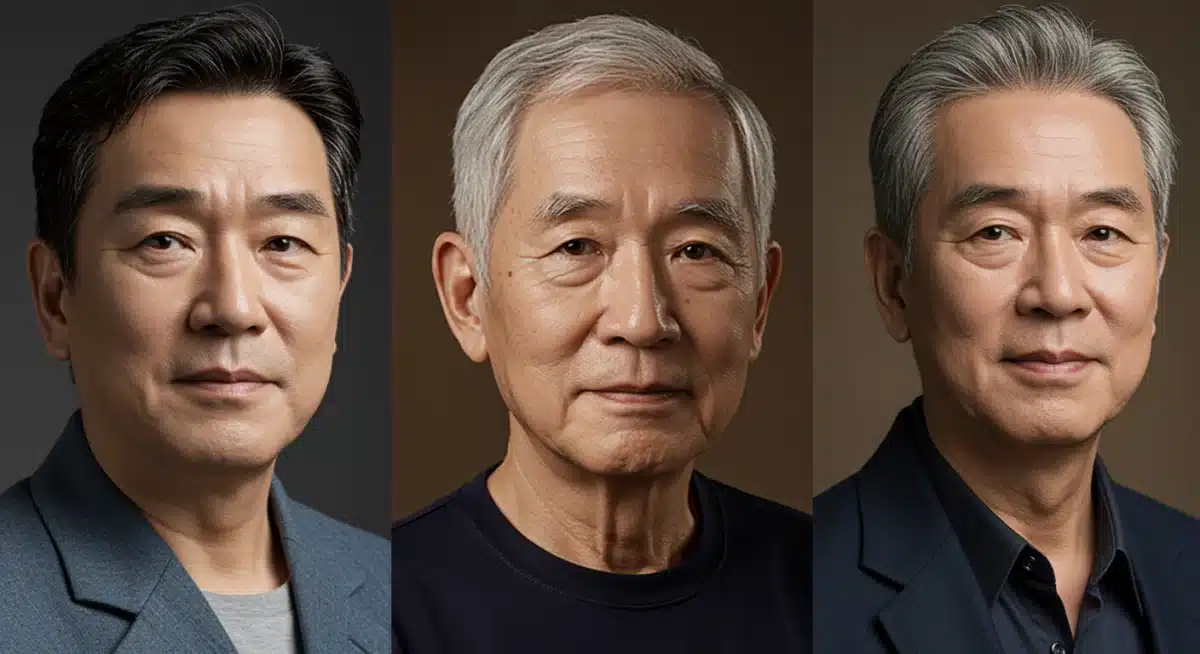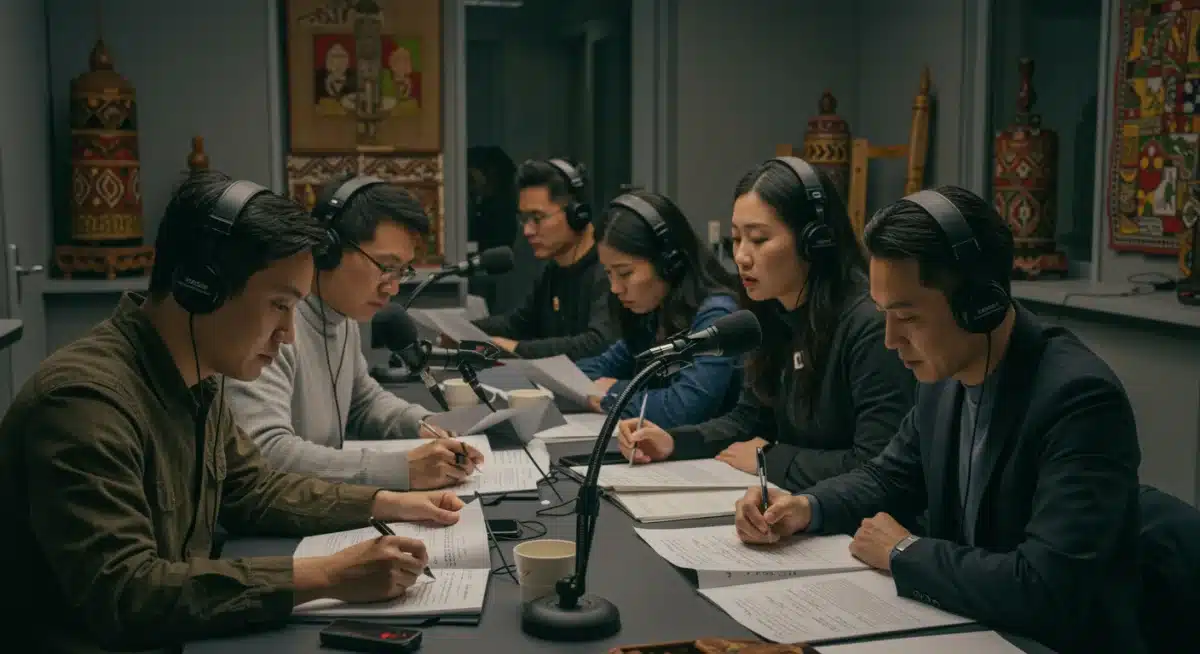
Three prominent Asian drama actors meticulously prepared for their demanding bilingual roles in 2024 productions, demonstrating profound dedication to linguistic authenticity and cultural nuance for global audiences.
In the evolving landscape of global entertainment, the demand for linguistic authenticity in acting has never been higher. For Asian drama actors, taking on bilingual roles presents a unique challenge that goes beyond mere translation. It requires a profound immersion into accents, cultural nuances, and often, a complete transformation of vocal identity. This article delves into how three Asian drama actors meticulously approached mastering accents bilingual roles in their highly anticipated 2024 productions, offering a fascinating glimpse into their dedicated preparation processes and the impact of their efforts on their performances.
The growing demand for bilingual performances
The global reach of Asian dramas has surged dramatically, leading to an increased need for actors who can authentically portray characters speaking multiple languages. This trend is driven by international co-productions, streaming platforms, and a more diverse audience base that appreciates linguistic accuracy. Actors are no longer just delivering lines; they are embodying entire cultural and linguistic identities.
This shift requires performers to go beyond basic fluency, focusing intensely on regional dialects, intonations, and the subtle rhythms of speech that define a native speaker. The audience’s keen ear for authenticity means that even minor linguistic inaccuracies can detract from a performance, making the actor’s preparation paramount.
Why linguistic authenticity matters
- Enhanced character depth: Accurate accents add layers of realism, making characters more believable and relatable.
- Broader audience appeal: Viewers appreciate the effort and precision, fostering a deeper connection with the story.
- Cultural representation: Respectful and accurate portrayal of language honors the culture it represents, avoiding stereotypes.
- Critical acclaim: Performances recognized for their linguistic mastery often garner significant industry praise and awards.
Ultimately, the meticulous preparation for bilingual roles speaks to the professionalism and artistic integrity of these actors, who understand that language is not just a tool for communication but a cornerstone of identity and narrative.
Actor A: Lee Min-ho’s journey to mastering American English
Lee Min-ho, a household name in Korean dramas, embarked on a significant linguistic challenge for his role in the 2024 sci-fi thriller, “Echoes of Tomorrow.” Playing a Korean-American scientist who grew up in the United States, Lee needed to deliver fluent, natural American English with a specific regional accent. This was a departure from his previous roles, which often featured either Korean or more generalized English.
His preparation began nearly a year before filming, involving a dedicated team of language coaches and dialectologists. Lee focused not just on pronunciation but also on the cadence and rhythm of American speech, particularly an East Coast accent relevant to his character’s backstory. He reportedly spent hours daily in immersive sessions.
Lee Min-ho’s rigorous training regimen
- Personalized coaching: One-on-one sessions with a native English speaker focusing on phonetics and intonation.
- Immersion techniques: Watching American films and TV shows exclusively, paying close attention to speech patterns.
- Shadowing exercises: Repeating dialogue immediately after native speakers to mimic pace and stress.
- Role-playing scenarios: Practicing conversations in character to internalize the accent in dynamic situations.
Lee’s commitment extended to living for several months in a predominantly English-speaking environment prior to filming, further solidifying his grasp of the language and accent. His dedication underscores the profound effort required to achieve linguistic mastery for a demanding bilingual role.
Actor B: Rina Sawayama’s transition to Japanese and British English
Rina Sawayama, known for her musical career and growing presence in Western cinema, took on a complex bilingual role in the 2024 historical drama “Sakura & Steel.” Her character, a Japanese-British journalist navigating post-World War II Japan, required seamless transitions between fluent, formal Japanese and nuanced British English, specifically a RP (Received Pronunciation) accent.
Sawayama, being bilingual from a young age, had a strong foundation, but the specific demands of the role necessitated specialized training. Her Japanese needed to sound period-appropriate and reflect her character’s educated background, while her British English had to be precise and articulate, without sounding overly theatrical.

Her preparation involved extensive research into linguistic patterns of the 1940s in both Japan and Britain. She worked with vocal coaches to refine her pronunciation and adopted specific breathing techniques to switch between languages effortlessly, ensuring a natural flow in her performance.
Key elements of Rina’s accent preparation
Rina’s approach was multi-faceted, leveraging her existing bilingualism while honing specific linguistic nuances for her character.
- Historical linguistic research: Studying recordings and texts from the 1940s to capture period-appropriate speech.
- Dialect-specific coaching: Working with experts on RP English and formal Japanese accents.
- Breathing and vocal control: Exercises to facilitate smooth transitions between languages and maintain vocal consistency.
- Cultural immersion: Engaging with historical accounts and media to understand the social context of language use.
Sawayama’s ability to embody both linguistic identities with such finesse highlights the importance of not just speaking a language, but truly understanding its cultural and historical context, a critical aspect of mastering accents bilingual roles.
Actor C: Tony Leung’s dive into Mandarin and Cantonese subtleties
Tony Leung, a legendary figure in Hong Kong cinema, continues to challenge himself with nuanced roles. In the 2024 political thriller “Dragon’s Shadow,” he played a character who frequently switches between Mandarin and Cantonese, often within the same scene, reflecting the complex linguistic landscape of contemporary China and Hong Kong. While Leung is a native Cantonese speaker and fluent in Mandarin, the role demanded specific regional accents within both languages, as well as a precise control over tone to convey his character’s shifting allegiances.
His preparation involved working with dialect coaches to differentiate subtle variations in Mandarin accents, particularly between Beijing and a more generalized northern accent, and refining his Cantonese to reflect a specific Hong Kong urban dialect. The goal was to make each linguistic choice purposeful, adding depth to his character’s motivations and background.
Tony Leung’s approach to linguistic nuance
Leung’s mastery lies in his ability to convey emotion and subtext through subtle vocal shifts, a skill he further refined for this role.
- Comparative dialect study: Analyzing the differences in pronunciation, vocabulary, and intonation between various Mandarin and Cantonese dialects.
- Emotional resonance in language: Practicing how different accents and tones convey specific emotional states.
- Script analysis for linguistic cues: Identifying moments where a language switch or accent variation could enhance character portrayal.
- Repetitive practice: Drilling challenging lines and dialogues to ensure seamless transitions and natural delivery.
Tony Leung’s commitment to these linguistic details showcases how even seasoned actors continually refine their craft, understanding that authenticity in language is key to a truly compelling performance when mastering accents bilingual roles.
Challenges and triumphs in accent acquisition
The journey of mastering multiple accents for bilingual roles is fraught with challenges, yet the triumphs are often what define an actor’s legacy. One of the primary hurdles is the sheer time commitment. It’s not enough to simply learn words; actors must internalize the rhythm, intonation, and subtle nuances that make an accent sound authentic. This often means dedicating months, sometimes even years, to intensive study and practice.
Another significant challenge lies in overcoming muscle memory. Our vocal cords and mouth muscles become accustomed to our native language’s specific movements. Learning a new accent requires retraining these muscles, which can be physically demanding and even frustrating. Actors often employ specific vocal exercises and tongue twisters to build new muscle memory.
Strategies for overcoming linguistic hurdles
Actors utilize a variety of strategies to navigate these difficulties, often combining traditional methods with innovative techniques.
- Phonetic breakdown: Deconstructing sounds into their smallest components to understand how they are produced.
- Recording and self-critique: Regularly recording their speech and comparing it to native speakers to identify areas for improvement.
- Speech therapy techniques: Adapting methods used in speech therapy to correct pronunciation and develop new vocal habits.
- Cultural immersion: Living in environments where the target language and accent are spoken daily, providing constant exposure and practice.
The triumph comes when an actor can deliver lines so naturally that the audience forgets they are listening to a learned accent. This level of seamless integration not only elevates the performance but also enriches the storytelling, proving that the effort put into mastering accents bilingual roles is invaluable.
The impact on global storytelling
The increasing dedication of Asian drama actors to mastering accents for bilingual roles has a profound impact on global storytelling. It breaks down linguistic barriers, allowing narratives to resonate with a wider, more diverse audience. When characters speak authentically in multiple languages, it adds layers of realism and cultural specificity that enrich the viewing experience.
This commitment also fosters greater respect for linguistic diversity within the entertainment industry. It moves beyond a tokenistic approach to language, celebrating the intricacies and beauty of different accents and dialects. Furthermore, it encourages international collaborations, leading to more complex and globally relevant productions that reflect our interconnected world.
Future trends in linguistic acting
The trend towards linguistic authenticity is likely to continue, with several key developments on the horizon.
- Advanced AI coaching: AI-powered tools may offer personalized and instant feedback on pronunciation and accent accuracy.
- Virtual reality immersion: VR environments could simulate real-world scenarios for practicing accents in context.
- Increased demand for polyglot actors: Actors fluent in multiple languages and adept at various accents will become highly sought after.
- Cross-cultural productions: More films and dramas will naturally integrate multiple languages, requiring actors to be versatile.
Ultimately, the rigorous preparation of actors for bilingual roles is not just about individual performance; it’s about pushing the boundaries of storytelling itself, creating a more inclusive and authentic representation of the world on screen. This dedication to mastering accents bilingual roles is setting new standards for global entertainment.
| Key Aspect | Description |
|---|---|
| Intensive Coaching | Actors engaged in extensive one-on-one sessions with language and dialect coaches. |
| Cultural Immersion | Living in target language environments and deep cultural research were crucial. |
| Specific Dialect Focus | Preparation extended to mastering regional and period-specific accents within languages. |
| Impact on Storytelling | Authentic linguistic performances enhance realism and global appeal of Asian dramas. |
Frequently Asked Questions about Bilingual Acting
The time required varies significantly based on the actor’s natural aptitude, the complexity of the accent, and the intensity of training. It can range from a few months for simpler accents to over a year for highly nuanced or unfamiliar ones, often involving daily dedicated practice and immersion.
Actors commonly utilize a range of resources including professional dialect coaches, native speaker recordings, phonetic guides, immersive media (films, TV, podcasts), and sometimes even living in the region where the accent is spoken. Speech therapy techniques are also sometimes adapted for vocal muscle retraining.
Both present unique challenges. Learning a new language involves vocabulary, grammar, and syntax. Mastering a new accent in an already known language focuses on subtle vocal shifts, intonation, and rhythm, which can be difficult to unlearn and relearn. Many find accent work more frustrating due to its precision.
Actors maintain their accents through continuous practice, often staying in character or speaking in the accent even off-set. They also have regular check-ins with their coaches and use recordings to ensure consistency. Immersing themselves in the accent’s linguistic environment helps prevent regression during extended shoots.
Cultural context is paramount. Language is deeply intertwined with culture; understanding the social norms, history, and daily life of a region helps actors grasp not just how words are said, but why they are said a certain way. This adds authenticity that goes beyond mere phonetic accuracy, enriching the entire performance.
Conclusion
The dedication exhibited by Lee Min-ho, Rina Sawayama, and Tony Leung in mastering accents bilingual roles for their 2024 productions sets a new benchmark for linguistic authenticity in Asian dramas. Their rigorous preparation, involving extensive coaching, immersive techniques, and deep cultural research, underscores a profound commitment to their craft and to delivering performances that resonate globally. As the world becomes increasingly interconnected, the ability of actors to seamlessly navigate multiple linguistic and cultural landscapes will continue to be a cornerstone of compelling storytelling, enriching narratives and fostering a deeper appreciation for diverse voices on screen.